- Beauty, Skin & Hair Care Peptide
- Skin Rejuvenation Peptide
- Growth Hormone & Performance Research
- Weight Loss & Metabolic Health Research | BIOVEA PEPTIDE®
- Organ Support Peptides
- Cognitive Health & Nootropics
- Recovery, Healing & Regeneration
- Muscle Growth & IGF Peptides
- Longevity & healthy Aging Peptides
- Immune System & Inflammation Peptides
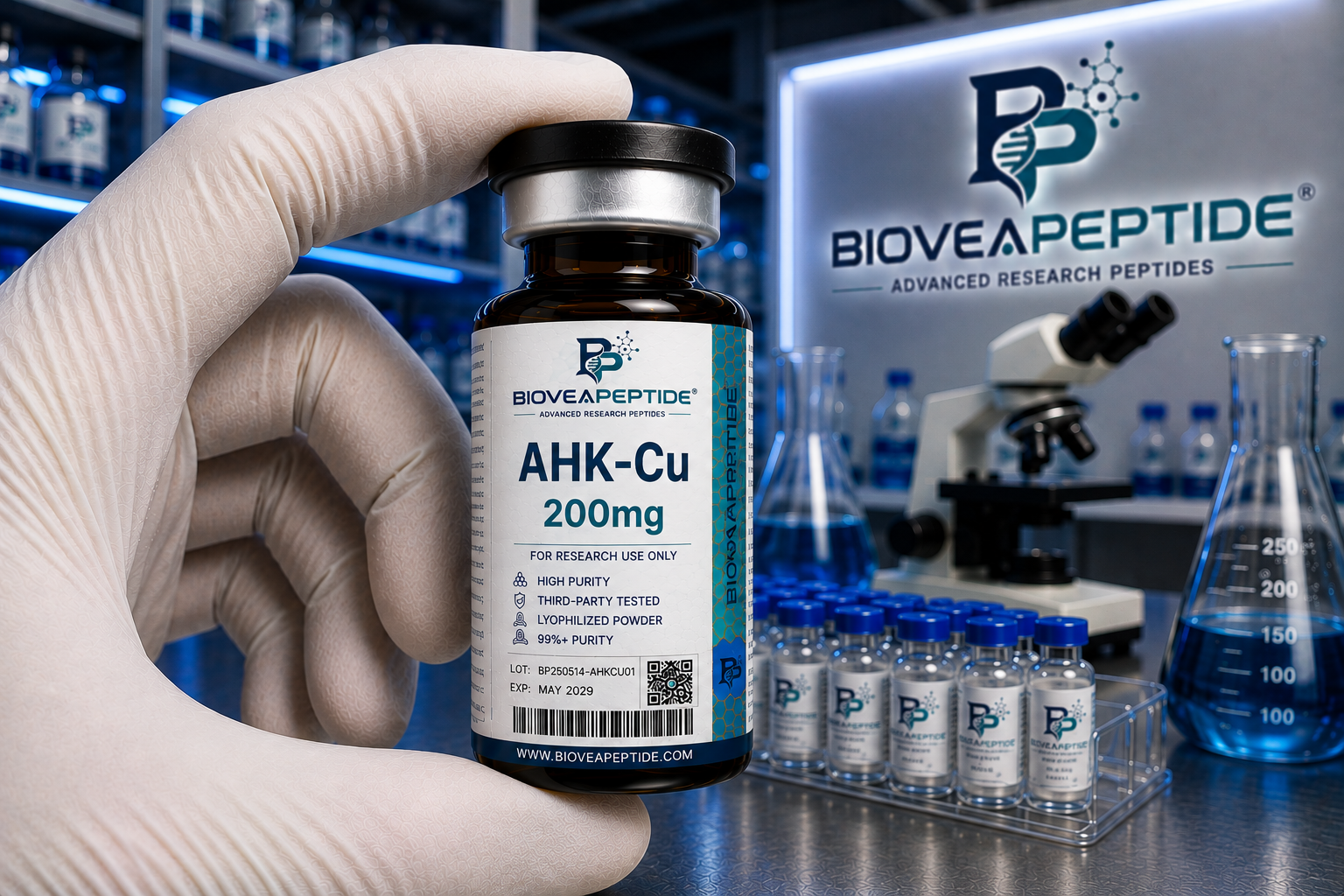
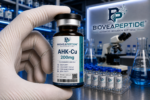

AHK-Cu (200mg)
$182.00
Purchase AHK-Cu (200mg),an experimental copper-binding peptide research material investigated in metal–peptide interactions, peptide chemistry, molecular biology, cellular signaling, protein biochemistry, and structure–function research. High-purity, laboratory-tested quality for scientific research. For research use only.
Buy Now
Description
Description
AHK-Cu (200mg)
AHK-Cu (200mg) is an experimental copper-binding tripeptide research material investigated in peptide chemistry, copper–peptide interactions, molecular biology, cellular signaling, protein biochemistry, and skin/cell biology research.
The 200mg format provides a defined quantity of research material for appropriately designed laboratory investigations.
For Research Use Only. Not intended for human or veterinary use, consumption, diagnosis, treatment, or prevention of disease.
AHK-Cu Research Profile
Potential research areas include:
- Copper–peptide interactions
- Metal-binding peptide research
- Peptide chemistry
- Molecular biology
- Cellular biology
- Protein biochemistry
- Cellular signaling
- Molecular recognition
- Peptide–protein interactions
- Structure–function research
- Biomolecular chemistry
- Experimental cell biology
Copper-Binding Research
AHK-Cu can be investigated as a model for studying interactions between short peptides and copper ions.
Potential investigations include:
- Copper coordination
- Metal–peptide interactions
- Peptide binding behavior
- Molecular recognition
- Metal-binding mechanisms
- Peptide structure–function relationships
- Biomolecular interactions
- Analytical peptide chemistry
Cellular & Molecular Research
Potential experimental areas include:
- Cellular signaling
- Molecular signaling
- Cell biology
- Molecular biology
- Protein interactions
- Cellular communication
- Molecular pathway research
- Protein biochemistry
Research observations depend on the experimental model, assay design, controls, peptide characterization, and analytical methodology.
Peptide Chemistry & Structure–Function Research
Potential applications include:
- Peptide characterization
- Copper-binding analysis
- Metal–peptide chemistry
- Structure–function research
- Peptide stability research
- Molecular recognition
- Protein–peptide interactions
- Analytical peptide science
- Biomolecular chemistry
Laboratory Research Applications
Potential research applications for AHK-Cu (200mg) include:
- AHK-Cu peptide research
- Copper-binding peptide research
- Metal–peptide interaction research
- Peptide chemistry
- Molecular biology
- Cellular biology
- Protein biochemistry
- Cellular signaling
- Molecular recognition
- Peptide–protein interaction research
- Structure–function research
- Biomolecular research
- Experimental cell biology
- Copper coordination research
- Analytical peptide research
Researchers should establish experimental conditions, controls, analytical methods, storage requirements, and handling procedures according to validated laboratory protocols and applicable institutional requirements.
Research Material & Quality Considerations
Researchers evaluating AHK-Cu (200mg) should review documentation associated with the applicable production batch, including where available:
- Peptide identity
- Structural information
- Purity information
- Batch identification
- Copper content/characterization
- Analytical testing
- Certificate of Analysis
- Storage specifications
- Product documentation
Why AHK-Cu Is Relevant to Research
AHK-Cu (200mg) provides a defined experimental short-peptide model for investigating copper coordination, metal–peptide interactions, peptide chemistry, molecular recognition, cellular signaling, and peptide structure–function relationships.
The 200mg format provides a defined quantity of research material for appropriately designed laboratory investigations.
Research Use Only
AHK-Cu (200mg) is supplied strictly as a laboratory research material.
It is not intended for human or veterinary use and should not be represented as a cosmetic treatment, medication, dietary supplement, or therapeutic product.
Research Use Only. Not for Human or Veterinary Use.