- Beauty, Skin & Hair Care Peptide
- Skin Rejuvenation Peptide
- Growth Hormone & Performance Research
- Weight Loss & Metabolic Health Research | BIOVEA PEPTIDE®
- Organ Support Peptides
- Cognitive Health & Nootropics
- Recovery, Healing & Regeneration
- Muscle Growth & IGF Peptides
- Longevity & healthy Aging Peptides
- Immune System & Inflammation Peptides
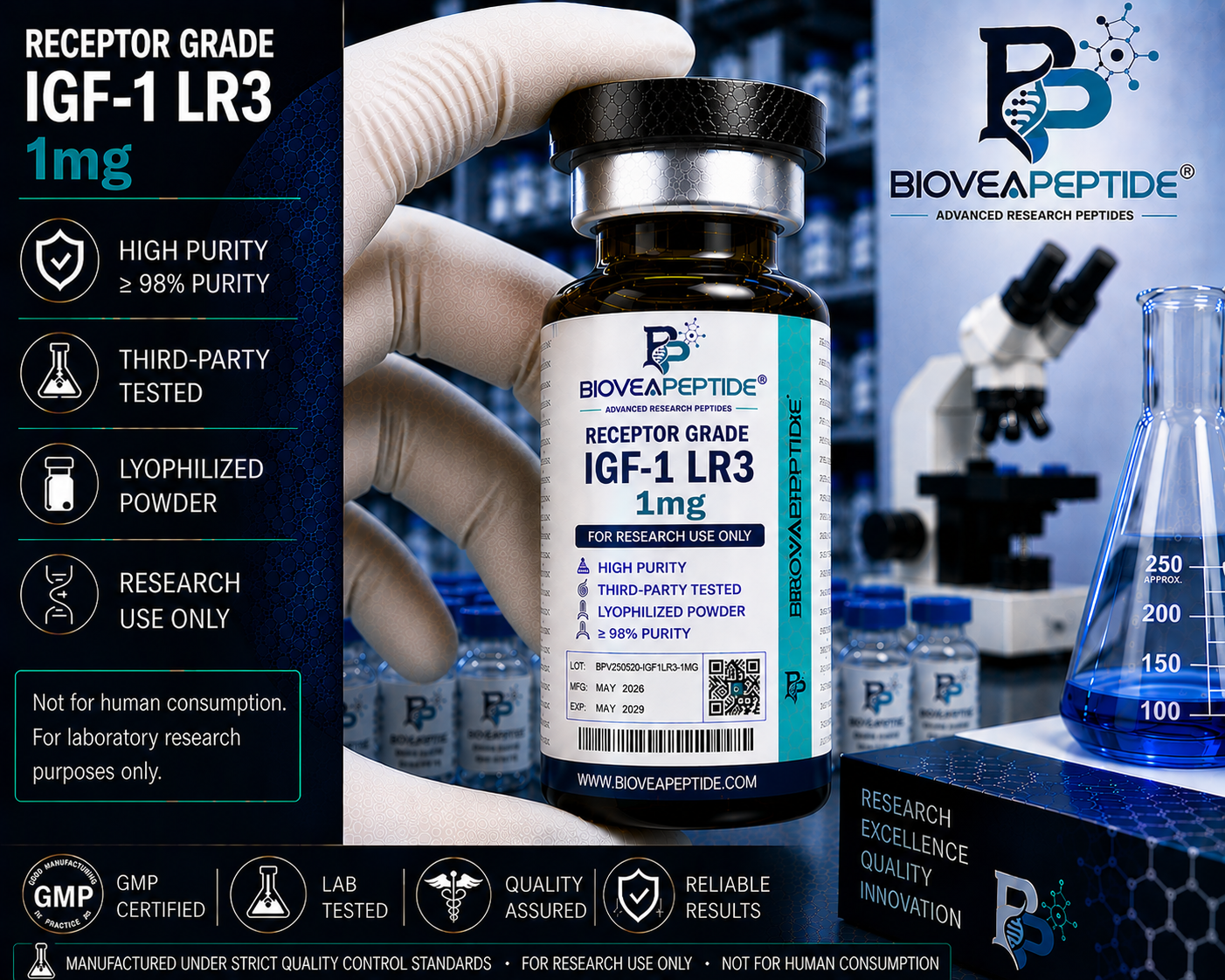
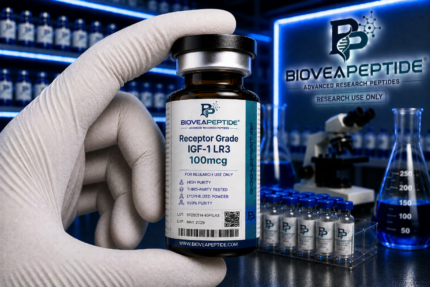
Receptor Grade IGF-1 LR3 (1mg)
$130.00
Purchase Receptor Grade IGF-1 LR3 (1mg), a laboratory research peptide investigated in IGF receptor biology, ligand–receptor interactions, molecular signaling, cellular communication, protein biochemistry, and experimental molecular research. High-purity, laboratory-tested quality for scientific research. For research use only.
Buy Now
Description
Description
Receptor Grade IGF-1 LR3 (1mg)
Receptor Grade IGF-1 LR3 (1mg) is a laboratory research material investigated in insulin-like growth factor (IGF) receptor biology, ligand–receptor interactions, molecular signaling, cellular communication, protein biochemistry, and experimental molecular biology.
IGF-1 LR3 is a modified analogue of insulin-like growth factor-1 (IGF-1) used as an experimental model for studying IGF-related molecular pathways. The 1mg format provides a defined research quantity for appropriately designed laboratory investigations involving receptor biology, protein interactions, signal transduction, and cellular signaling.
The receptor-grade designation is relevant to research applications focused on receptor–ligand interactions and molecular characterization. Experimental findings depend on the biological model, receptor expression, assay design, controls, and analytical methodology.
For Research Use Only. Not intended for human or veterinary use, consumption, diagnosis, treatment, or prevention of disease.
IGF-1 LR3 Research Profile
IGF-1 LR3 is investigated as a modified IGF-related peptide in experimental studies involving IGF receptor signaling and molecular recognition.
Potential research areas include:
- IGF receptor biology
- IGF-related signaling pathways
- Ligand–receptor interactions
- Molecular recognition
- Cellular signaling
- Signal transduction
- Protein–ligand interactions
- Protein structure–function research
- Molecular biology
- Cell biology
- Receptor pharmacology
- Experimental protein science
Receptor & Ligand Interaction Research
A significant research application of Receptor Grade IGF-1 LR3 involves studying interactions between IGF-related ligands and receptor systems.
Laboratory investigations may examine:
- Receptor–ligand recognition
- Molecular binding characteristics
- Receptor biology
- Signal-transduction pathways
- Cellular response mechanisms
- Protein–ligand interactions
- Receptor expression
- Intracellular signaling
- Molecular pathway analysis
These are research applications rather than therapeutic claims.
Cellular Signaling & Molecular Biology
IGF-related signaling provides a model for investigating communication between extracellular molecular signals and intracellular pathways.
Relevant research fields include:
- Cellular signaling
- Signal transduction
- Cell communication
- Molecular pathway research
- Receptor biology
- Protein regulation
- Gene-expression research
- Cell-based research
- Molecular pharmacology
- Experimental cell biology
Protein Biochemistry & Structure–Function Research
IGF-1 LR3 is also relevant to research examining relationships between molecular structure, receptor recognition, and signaling behavior.
Potential areas include:
- Protein–ligand interaction studies
- Peptide–receptor research
- Protein structure–function analysis
- Molecular recognition
- Protein biochemistry
- Peptide chemistry
- Biomolecular interaction research
- Receptor pharmacology
- Molecular biology
- Experimental protein science
Laboratory Research Applications
Potential research fields for Receptor Grade IGF-1 LR3 (1mg) include:
- IGF receptor research
- IGF-1 signaling research
- Ligand–receptor interaction studies
- Receptor biology
- Cellular signaling research
- Signal transduction studies
- Molecular biology
- Cell biology
- Protein biochemistry
- Protein–ligand research
- Molecular pharmacology
- Peptide chemistry
- Protein structure–function research
- Experimental receptor research
- Preclinical molecular research
Researchers should determine appropriate experimental conditions, controls, analytical methods, storage requirements, and handling procedures according to validated laboratory protocols and applicable institutional requirements.
Research Material & Quality Considerations
Researchers evaluating Receptor Grade IGF-1 LR3 (1mg) should review documentation associated with the applicable production batch.
Relevant documentation may include:
- Peptide/protein identity
- Purity information
- Batch identification
- Molecular characterization
- Analytical testing
- Certificate of Analysis, where available
- Storage specifications
- Product documentation
For receptor-focused research, applicable batch and analytical documentation should be reviewed before laboratory use.
Why Receptor Grade IGF-1 LR3 Is Relevant to Research
Receptor Grade IGF-1 LR3 (1mg) provides a defined experimental model for investigating:
- IGF receptor biology
- IGF-related signaling
- Ligand–receptor interactions
- Molecular recognition
- Cellular signaling
- Signal transduction
- Protein biochemistry
- Molecular biology
- Cell biology
- Receptor pharmacology
- Protein–ligand research
- Experimental protein science
The 1mg quantity is a defined research format for appropriately designed laboratory investigations.
Research Use Only
Receptor Grade IGF-1 LR3 (1mg) is supplied strictly as a laboratory research material.
It is not intended for human or veterinary use and should not be represented as a medication, dietary supplement, performance product, or therapeutic treatment. Experimental findings should not be presented as established evidence of safety or efficacy for human use.
Research Use Only. Not for Human or Veterinary Use.