- Beauty, Skin & Hair Care Peptide
- Skin Rejuvenation Peptide
- Growth Hormone & Performance Research
- Weight Loss & Metabolic Health Research | BIOVEA PEPTIDE®
- Organ Support Peptides
- Cognitive Health & Nootropics
- Recovery, Healing & Regeneration
- Muscle Growth & IGF Peptides
- Longevity & healthy Aging Peptides
- Immune System & Inflammation Peptides
-33%
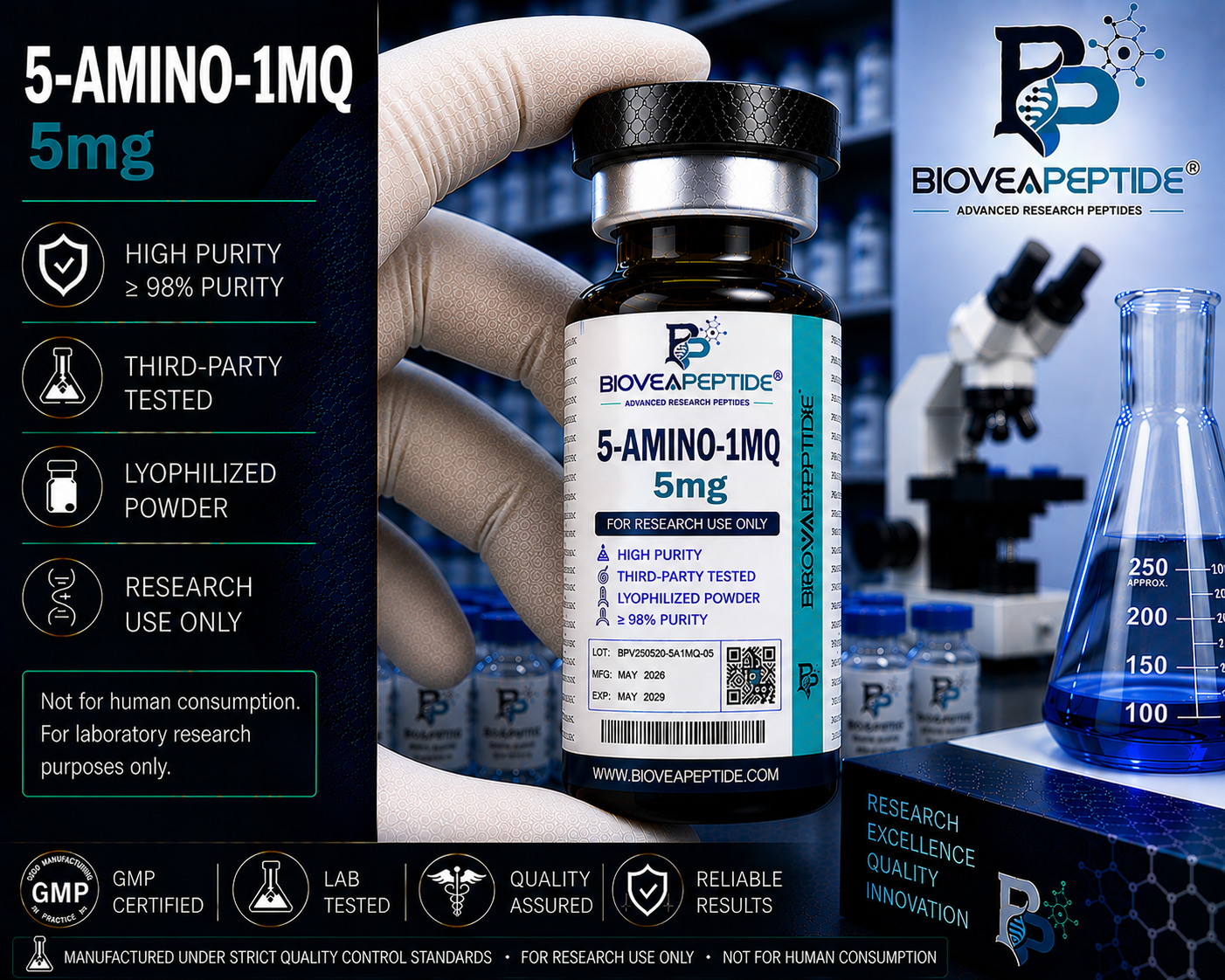
5-Amino-1MQ (5-Amino-1-Methylquinolinium)
Original price was: $75.00.$50.00Current price is: $50.00.
Purchase 5-Amino-1MQ, a premium laboratory small-molecular research compound investigated in NNMT-related enzymatic, metabolic, methylation, and cellular biology research. Research use only.
Buy Now
Description
Description
5-Amino-1MQ (5-Amino-1-Methylquinolinium) is a synthetic small-molecule research compound investigated extensively in molecular biology, biochemical research, enzyme-inhibition studies, cellular metabolism, methylation biology, and metabolic signaling research. Unlike peptide-based research materials, 5-Amino-1MQ is a low-molecular-weight chemical compound and is primarily studied for its interaction with nicotinamide N-methyltransferase (NNMT) and related biochemical pathways.
NNMT is an enzyme involved in the metabolism of nicotinamide and the regulation of methyl-donor utilization within cells. Because of its connection to cellular metabolic pathways, NNMT has become an important subject of investigation in chemical biology, metabolism, and molecular research. 5-Amino-1MQ provides researchers with a defined experimental compound for studying these pathways under controlled laboratory conditions.
For Research Use Only. Not intended for human consumption, veterinary use, diagnosis, treatment, or prevention of disease.
Small-Molecule Research & NNMT Investigation
Reliable molecular research requires well-characterized compounds that can be incorporated into carefully designed experimental systems. 5-Amino-1MQ is investigated primarily as a research tool for examining NNMT-associated biochemical activity and the downstream molecular pathways connected to this enzyme.
Research involving 5-Amino-1MQ may help investigators examine:
- NNMT-related enzymatic pathways
- Nicotinamide metabolism
- Cellular methylation processes
- S-adenosylmethionine (SAM)-associated pathways
- NAD-related metabolic research
- Cellular metabolic signaling
- Enzyme-inhibition mechanisms
- Molecular interactions
- Intracellular biochemical pathways
- Chemical-biology investigations
- Cellular metabolism models
- Experimental molecular biology
These applications are intended to support in vitro, biochemical, cellular, and other controlled research models and should be interpreted within the limitations of the particular experimental system.
Molecular Biology & Biochemical Research
5-Amino-1MQ is particularly relevant to researchers investigating the relationship between enzyme activity and cellular metabolism. NNMT participates in methylation-related biochemical processes, making it a useful target for studying how alterations in enzyme activity can influence broader metabolic pathways.
Laboratory investigations may examine the compound alongside appropriate biochemical assays, cellular models, molecular analysis techniques, and analytical methodologies. Such research can contribute to a broader understanding of enzyme function, metabolic regulation, and cellular signaling.
Potential research areas include:
- Enzyme activity investigations
- NNMT pathway research
- Methylation biology
- Metabolic enzyme research
- Cellular metabolism
- Molecular signaling
- Chemical biology
- Biochemical pathway analysis
- Cellular pathway investigations
- Experimental pharmacology
- Molecular interaction studies
- Research assay development
Laboratory Research & Experimental Applications
The versatility of small-molecule research compounds allows investigators to incorporate them into different experimental designs depending on the scientific question being examined. 5-Amino-1MQ may therefore be relevant to laboratories conducting research into enzymatic mechanisms, cellular metabolism, molecular signaling, and related biochemical pathways.
Researchers should establish appropriate experimental concentrations, controls, assay conditions, analytical methods, and handling procedures according to their validated laboratory protocols and institutional requirements. This product description does not constitute an experimental protocol or recommended method of use.
Quality & Research Material Considerations
High-quality research depends on appropriate characterization and consistency of experimental materials. When evaluating 5-Amino-1MQ, researchers should consider relevant product documentation, compound identity, analytical characterization, purity information, batch documentation, storage requirements, and applicable laboratory handling procedures.
Depending on the supplier and batch, supporting documentation may include analytical information such as:
- Compound identity
- Purity analysis
- Batch identification
- Molecular characterization
- Analytical testing
- Certificate of Analysis (where available)
- Storage information
- Product specifications
Researchers should consult the applicable product documentation accompanying the specific batch before incorporating the material into an experiment.
Why 5-Amino-1MQ Is Relevant to Molecular Research
The scientific interest surrounding 5-Amino-1MQ is closely associated with the study of NNMT and its relationship to cellular metabolism and methylation biology.
Its research relevance makes it suitable for laboratories investigating the connections between enzyme activity, metabolic pathways, methyl-donor utilization, and cellular biochemical processes.
Areas of scientific investigation may include:
- NNMT enzyme research
- Methylation pathway research
- Nicotinamide metabolism
- Cellular metabolic research
- Biochemical signaling
- Molecular biology
- Chemical biology
- Enzyme inhibition studies
- Metabolic pathway analysis
- Cellular signaling research
- Experimental molecular pharmacology
- Small-molecule screening
Research Use Only
5-Amino-1MQ is supplied strictly as a laboratory research compound.
It is not intended for human or veterinary use and should not be represented as a medicine, dietary supplement, cosmetic ingredient, or therapeutic product. Research findings obtained from biochemical, cellular, or preclinical models should not automatically be interpreted as evidence of effects in humans.
Researchers are responsible for ensuring that the compound is handled, stored, tested, and evaluated according to appropriate laboratory procedures, institutional requirements, and applicable regulations.
Research Use Only. Not for Human or Veterinary Use.